9 Jul 2026
Tracing the Evolution of RNG Certification Standards in Global Digital Gaming Markets
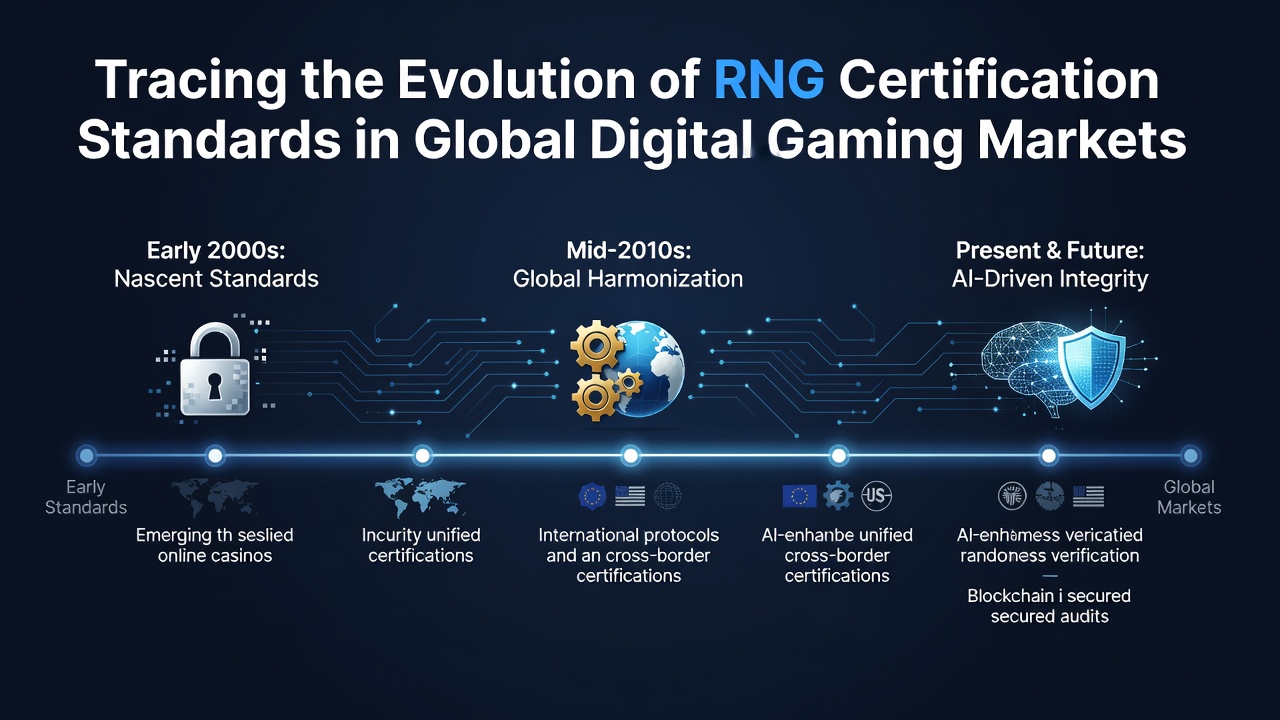
Random number generators have formed the backbone of fairness in digital gaming since the earliest online platforms emerged in the mid-1990s, and certification standards have developed in response to technological advances plus regulatory demands across continents. Early systems relied on basic algorithms that operators often tested internally, yet rapid growth in player bases prompted independent verification to build trust, and labs began establishing protocols that measured statistical randomness alongside resistance to manipulation.
Foundations in the 1990s and Early 2000s
Initial RNG certification efforts centered on North American land-based transitions to digital formats, where state regulators required proof that slot outcomes matched advertised probabilities, and organizations such as Gaming Laboratories International introduced testing frameworks that evaluated both hardware and software components. These standards spread to emerging online markets because operators needed to demonstrate integrity to international audiences, while companies like BMM Testlabs expanded their scope to include remote gaming servers by the early 2000s.
Australian authorities contributed early benchmarks through their national framework, which mandated periodic audits of RNG sequences, and data from those programs showed consistent alignment between theoretical and actual return percentages across thousands of game cycles. European jurisdictions followed with their own requirements once online casinos gained traction, creating a patchwork that later influenced global harmonization efforts.
Expansion Across Regions and Standardization Push
By the 2010s certification bodies had refined their methodologies to cover live dealer integrations and mobile platforms, while researchers at institutions such as the University of Nevada documented how improved statistical sampling reduced variance errors in certified systems. Observers note that operators in Asia adopted similar processes to access Western markets, and one study revealed that certified RNG modules experienced fewer compliance disputes during cross-border expansions.
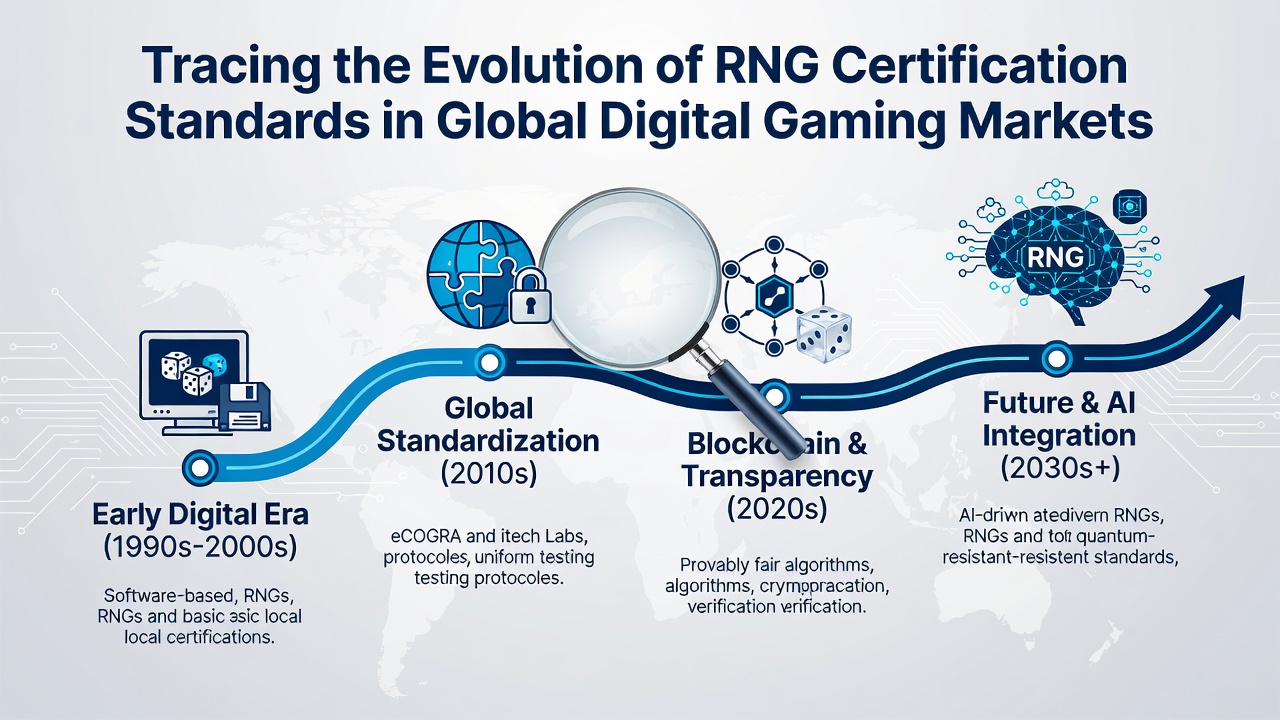
Canada's provincial regulators incorporated RNG audits into licensing renewals around 2015, and figures from those reviews indicated that updated seed generation techniques lowered predictability risks compared with earlier generations of software. Industry associations coordinated working groups to align test parameters, which helped smaller developers meet requirements without prohibitive costs, although implementation timelines varied by jurisdiction.
Recent Developments Leading Into 2026
Advances in quantum-resistant algorithms prompted renewed scrutiny starting in 2023, and certification labs introduced protocols that assess RNG performance under simulated high-load conditions. In July 2026 several international testing bodies plan to release joint guidelines that incorporate machine learning checks for pattern detection, while data shared among regulators shows these measures address vulnerabilities identified in legacy systems still operating in certain markets.
Trade organizations have documented how certification reduces operational friction for multi-jurisdictional operators, and examples include platforms that achieved simultaneous approvals in Australia and select European territories after passing unified test suites. Academic papers from research centers continue to analyze long-term outcome distributions, confirming that certified generators maintain fairness metrics over extended play periods.
Conclusion
The progression of RNG certification standards reflects ongoing adaptation to new technologies and market realities, with laboratories, regulators, and developers each contributing to frameworks that prioritize verifiable randomness. Continued collaboration across regions supports consistent player protections while enabling innovation in game design, and current trajectories suggest further refinements will emerge as computational capabilities advance.