28 May 2026
Poker Loyalty Tiers Reshape Player Approaches Across Global Circuits

Players reach loyalty milestones in poker rooms and casino networks through accumulated play hours, tournament entries, and cash game volume, and these achievements trigger adjustments in betting patterns, table selection, and risk tolerance. Data from industry reports shows that participants who hit mid-tier status often recalibrate their game to protect accumulated rewards while still pursuing further advancement.
Defining Loyalty Milestones in Poker Environments
Casino operators structure loyalty programs around points earned from rake, tournament fees, and session duration, with thresholds unlocking benefits such as discounted hotel stays, priority tournament seating, and complimentary tournament entries. Research from the American Gaming Association indicates that these systems operate across both land-based and online platforms, creating measurable shifts in how regulars approach session planning and bankroll allocation.
When participants cross into higher tiers, they gain access to protected tables or reduced rake structures that influence decisions around game selection. Observers note that players frequently move from high-variance cash games toward more controlled tournament formats once milestone rewards include entry packages, since those benefits reduce the immediate financial exposure per event.
Strategic Adjustments Triggered by Tier Advancement
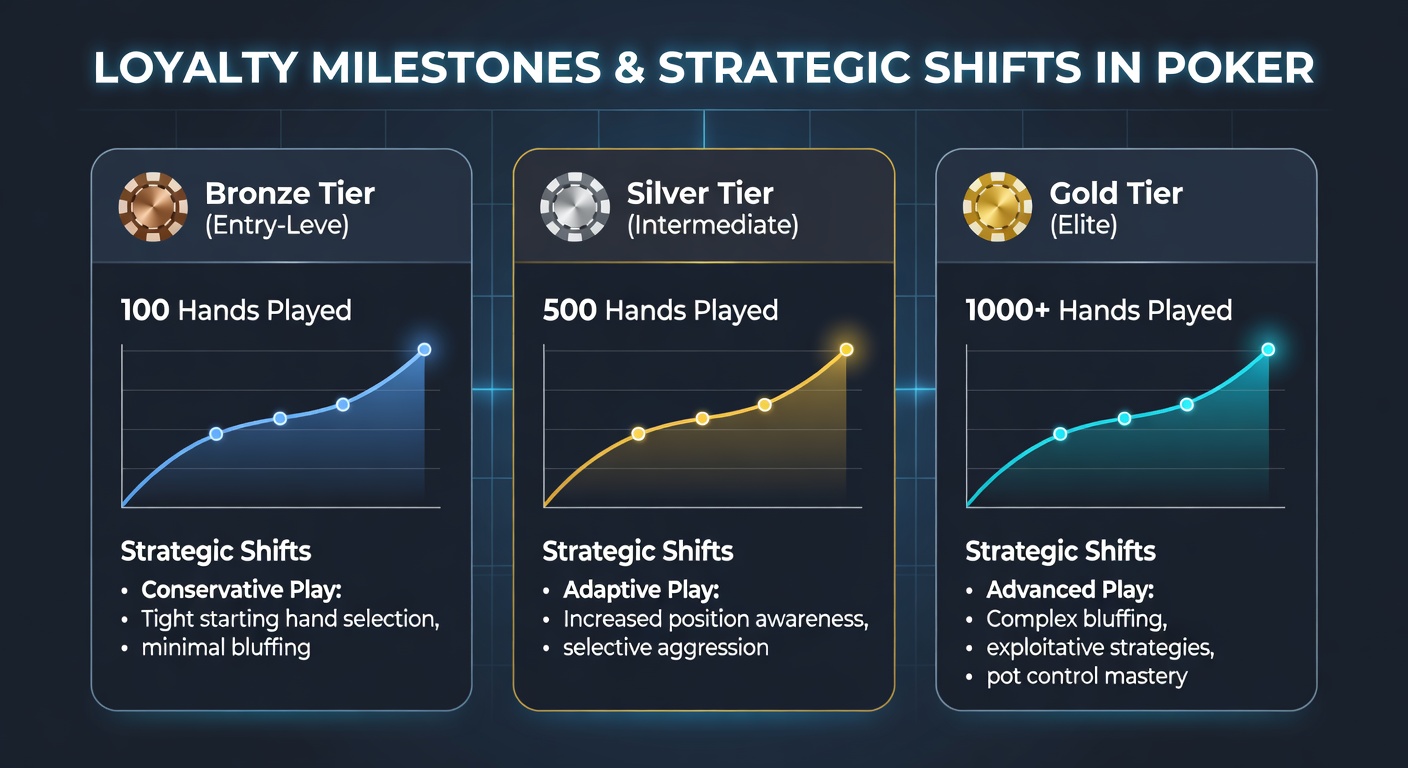
Reaching initial milestones often prompts tighter pre-flop ranges and selective aggression because participants seek to extend session length without depleting bankrolls needed for continued point accumulation. Studies conducted through university research programs in Australia reveal that players at bronze and silver levels demonstrate measurable increases in fold frequency during marginal spots compared to non-program participants at similar stakes.
Once gold or platinum status activates, the calculus changes again. Complimentary entries and travel perks allow for broader experimentation with multi-table formats or higher buy-in events, since the marginal cost per tournament decreases. Figures from Canadian regulatory filings show corresponding rises in average buy-in amounts among loyalty members who have secured multiple free entries within a calendar quarter.
Bankroll Management and Milestone Timing
Loyalty structures interact directly with bankroll strategies because milestone rewards function as extensions of effective stack size. Participants who track upcoming threshold dates often increase volume in the weeks preceding a new tier unlock, accepting slightly wider ranges to accelerate point totals. Data compiled by European gaming associations demonstrates that this volume spike correlates with temporary elevations in standard deviation before participants revert to baseline styles after securing the reward.
Post-milestone periods produce the opposite effect. Players who have locked in travel credits or entry packages frequently adopt more conservative lines during cash games to preserve chips for the upcoming sponsored events, since the value of those benefits exceeds typical hourly rates at lower stakes.
Regional Variations in Program Influence
Programs in North American markets emphasize cash game point multipliers during promotional windows, leading regulars to concentrate play during those periods and adjust session timing accordingly. In contrast, Australian operators tie milestones more closely to tournament series participation, which shifts focus toward satellite qualification strategies and multi-day event endurance tactics.
May 2026 brings scheduled updates to several international networks, including expanded cross-property point redemption options that connect land-based and online platforms. These changes are expected to further influence how players distribute their time across different game types and jurisdictions.
Long-Term Effects on Playing Styles
Longitudinal tracking by independent research institutions shows that sustained loyalty participation correlates with more disciplined bankroll tracking and reduced emotional decision-making at critical junctures. The presence of visible progress bars and reward previews appears to anchor participants to longer-term planning rather than immediate session outcomes.
Yet the same data sets indicate that players who reach elite tiers sometimes increase variance again, leveraging accumulated perks to explore higher-stakes environments where the reward-to-risk ratio improves because of offset costs from loyalty benefits.
Conclusion
Loyalty milestones function as structural elements within modern poker ecosystems that interact with core strategic decisions around game selection, aggression levels, and session duration. As programs evolve through 2026 and beyond, the measurable influence on player behavior continues to expand across both recreational and professional segments of the game.