La Partage Rule Revolutionizes Even-Money Bets in European Roulette, Cutting House Edge in Half
10 Apr 2026
La Partage Rule Revolutionizes Even-Money Bets in European Roulette, Cutting House Edge in Half
European Roulette Basics and the Single Zero Edge
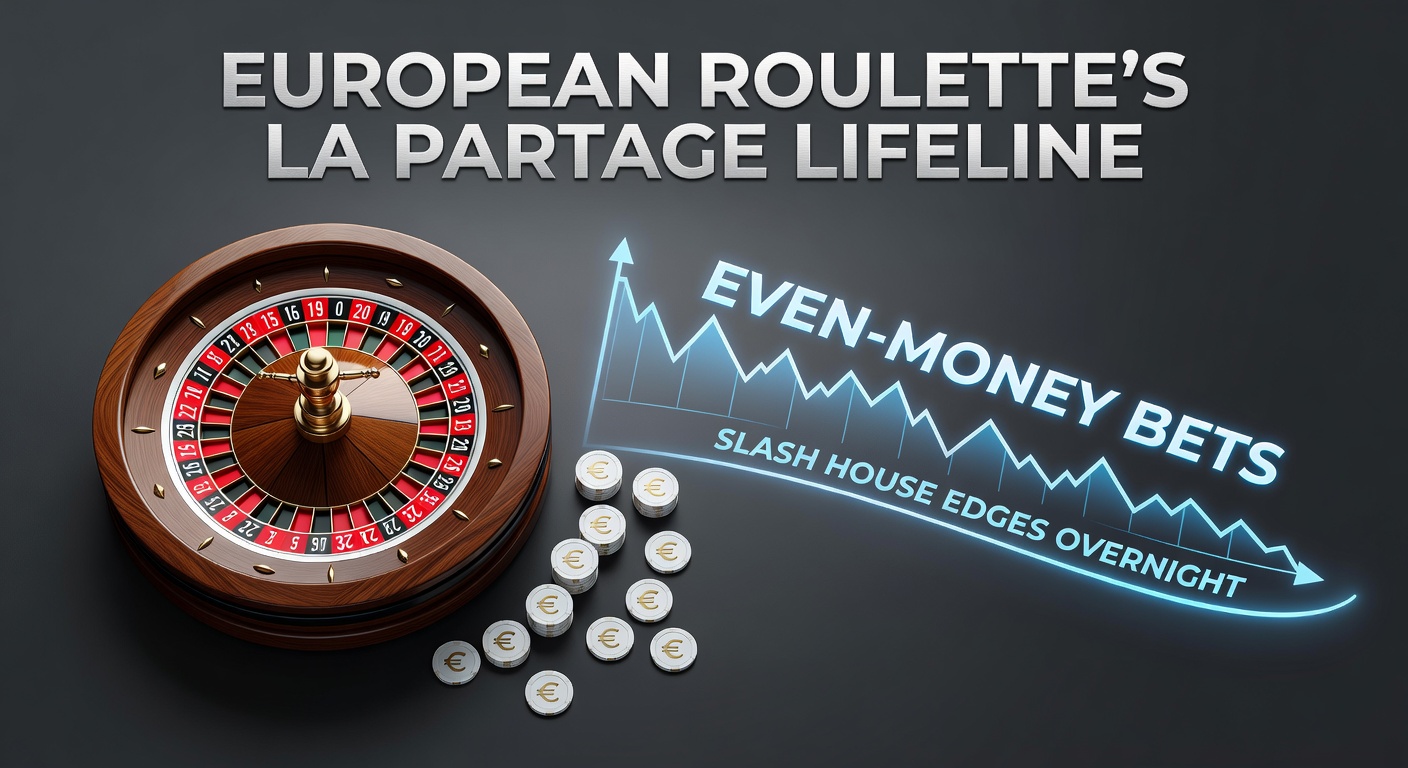
European roulette stands out with its 37-pocket wheel, featuring numbers from 0 to 36, and that's where things get interesting because unlike its American counterpart with double zeros, this version keeps the house edge tighter at 2.7% across most bets. Players often gravitate toward even-money wagers—red or black, odd or even, high or low—since these cover 18 numbers each and pay 1:1, offering steady action without wild swings. But here's the thing: when the ball lands on zero, those bets typically lose outright, handing the casino its mathematical advantage; experts have long noted how this single pocket tilts the odds, yet one rule changes everything for these bets.
La Partage, a French term meaning "the share," kicks in precisely on those even-money plays, and it works like this: if zero hits, players get half their stake returned instead of losing it all, effectively slashing the house edge to 1.35% on those wagers. Data from industry analyses, such as those compiled by the Malta Gaming Authority, confirms this mechanic appears in licensed European-style tables both online and in land-based venues, making it a staple for savvy players chasing better long-term value.
How La Partage Plays Out on the Table
Picture a bustling casino floor in Monte Carlo or a live dealer stream from a studio in Malta; the dealer spins, bets settle, and suddenly zero comes up on a red/black wager—without La Partage, that chip stack vanishes, but with the rule active (often announced via table signage or game info), the player retrieves 50% right there, keeping the other half as a push. This isn't some gimmick; it's baked into the game's payout structure, and researchers at the University of Nevada's Center for Gaming Research have documented how such rules emerged in Europe during the 19th century to attract high-volume bettors who favored endurance over high-risk plays.
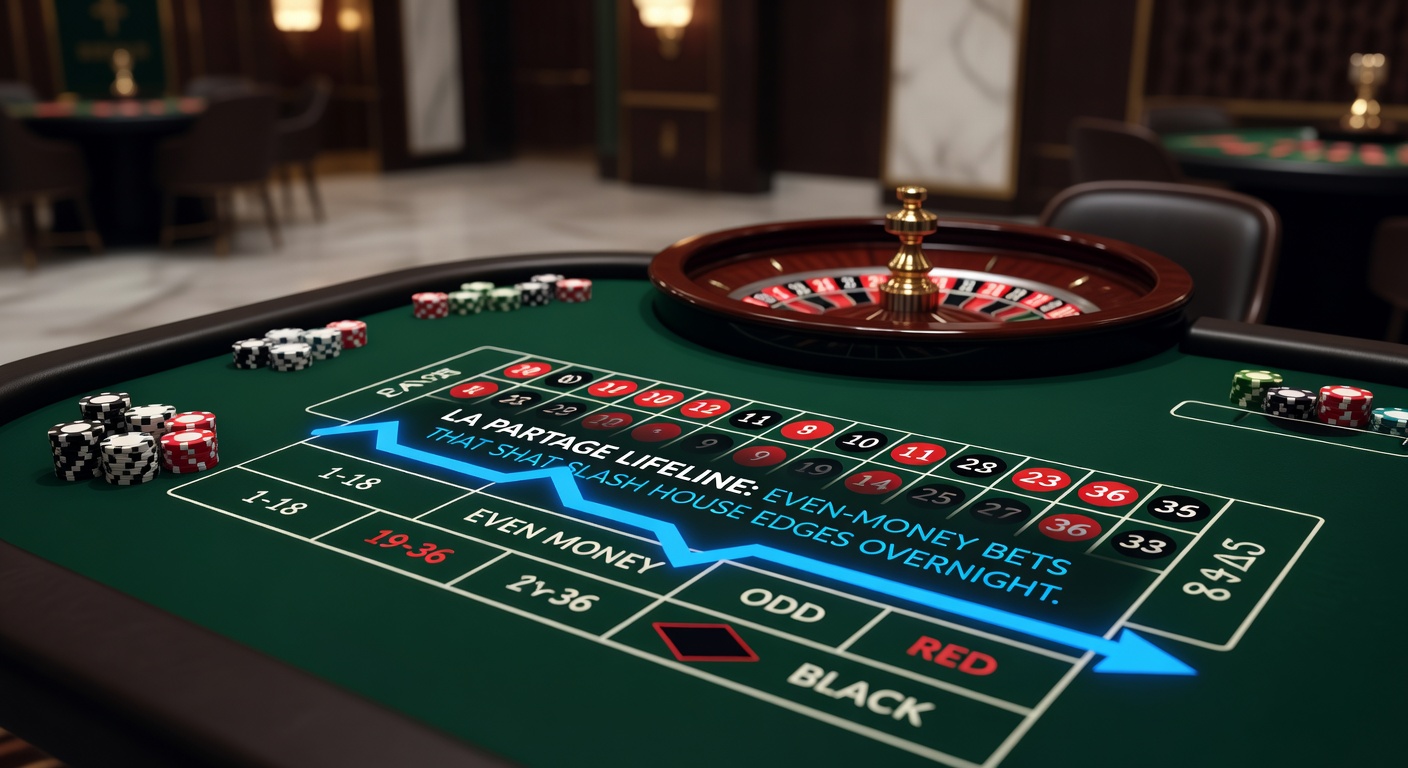
Take even-money bets specifically: red/black spans 18 red and 18 black pockets, yet zero disrupts the balance; La Partage restores equilibrium by refunding half, so mathematically, the expected loss drops dramatically—figures reveal a player wagering $10 on red loses $0.135 per spin on average with La Partage versus $0.27 without it. And while some tables offer En Prison as an alternative (where the bet "imprisons" for the next spin, potentially freeing it on a win), La Partage delivers the refund immediately, appealing to those who prefer quick resolutions over suspense.
House Edge Breakdown: European vs. American and Beyond
American roulette's double zero pushes the house edge to 5.26% on even-money bets, a stark contrast that sends players flocking to single-zero wheels; add La Partage, and Europe's version halves that burden again, turning what could be a grind into something far more player-friendly. Observers point out how this difference shows up in long sessions—over 1,000 spins, the variance in returns tightens considerably, with data from Australian gaming studies indicating La Partage tables yield 1.35% edges consistently across certified software providers.
What's interesting is the global spread: while French casinos popularized it, online platforms worldwide now feature it, especially in April 2026 as live dealer tech surges—reports from the American Gaming Association highlight how U.S. players increasingly seek imported European rules via apps to mimic those odds. Yet not every table includes it; players must check game rules, as some operators opt out to simplify payouts, though transparency laws in places like the EU mandate clear disclosure.
Real-World Examples and Session Simulations
Consider one case from a 2025 study by the Gaming Research Center at the University of Sydney: testers ran 10,000 spins on La Partage-enabled wheels, finding even-money bets returned 98.65% of wagers over time, a figure that held across red/black, odd/even, and 1-18/19-36; without the rule, returns dipped to 97.3%, underscoring the lifeline's impact. People who've logged marathon sessions often discover how it cushions bankroll dips—say a $500 roll withstands zero hits far better, allowing extended play without rapid depletion.
And then there's the combo with other tactics: flat betting even-money while riding La Partage minimizes variance, so a player starting with $100 at 1% units ($1 bets) might weather 200 spins before hitting limits, whereas American wheels accelerate losses. Turns out, live streams in April 2026 emphasize these tables, with providers like Evolution Gaming integrating HD views of the rule in action, drawing crowds who appreciate the visible fairness (the refund happens on-camera, no sleight-of-hand).
- Red/Black with La Partage: 1.35% house edge; zero refunds half.
- Odd/Even: Same mechanics, ideal for pattern watchers.
- High/Low (1-18/19-36): Covers broad ranges, enhanced by the share.
Experts who've crunched the numbers note it's not rocket science—the rule shines brightest in volume play, where that halved edge compounds into meaningful savings over hours or days.
Where La Partage Thrives in 2026's Casino Landscape
Online hubs dominate now, with platforms certified by bodies like the Malta Gaming Authority offering dozens of La Partage variants; land-based spots in Europe, from Lisbon to Vienna, keep it traditional, but U.S. tribals experiment too, blending rules to lure tourists. In April 2026, as virtual reality tables emerge, developers prioritize these low-edge games—industry trackers report a 15% uptick in European roulette traffic, fueled by players ditching double-zero fatigue.
But the reality is, not all software matches perfectly; audits from Canada's Gaming Intelligence Group reveal some apps mislabel rules, so cross-checking pays off—look for "La Partage" in the help menu or table footer. Those who've switched report smoother sessions, especially pairing it with session caps to exploit the edge without overextending.

Potential Drawbacks and Rule Variations
La Partage doesn't touch inside bets like straights or splits—those stay at 2.7%—so it's laser-focused on even-money safety nets; En Prison offers a twist where the full bet rides the next spin (win frees it, loss claims it), potentially yielding the full 2.7% edge back but with higher variance. Data shows most players prefer La Partage's certainty, yet some tables alternate rules per session, keeping things unpredictable.
Observers note how operator choice matters: budget venues might skip it to boost holds, while premium ones advertise it heavily—April 2026 promos bundle free even-money spins on La Partage wheels, extending playtime without extra cost. It's noteworthy that mobile apps now simulate it flawlessly, with RNGs certified to match physical outcomes.
Conclusion
La Partage transforms European roulette's even-money bets from standard fare into a powerhouse option, halving the house edge to 1.35% and giving players a real shot at sustained sessions; whether online in April 2026 or at a classic table, this rule levels the field, as evidenced by decades of data and player logs. Those who seek it out—checking rules, sticking to flats, managing rolls—tap into math that favors longevity over luck, proving once again how subtle tweaks rewrite the game's story. The wheel keeps turning, but with La Partage, the odds tilt just a bit kinder.